 Check-in
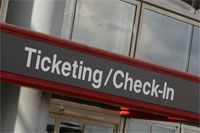
Before you can enter the security zone, you will need to check-in. The check-in serves two main purposes: deliver your checked baggage and get a boarding card. Routines varies from airports and between the airlines, therefore this page is considering a standard check-in routine.
What is happening at the check-in?
When you find your check-in counter, you will have to deliver your checked baggage and your tickets (if you have paper tickets) or your identification (if you have an e-ticket). You will have to present your passport if your flight requires this. The clerk at the check-in will weigh your baggage to assure that you do not have oversized baggage, and mark it with a destination tag. Normally you will not se your baggage again before you arrive in a transfer zone or at your destination. The clerk is issuing a boarding card that you will need to enter the security zone and to board the plane. Some airlines are not issuing boarding cards for e-tickets. Your identification is your boarding card in those cases. You will get a seat number if your plane has seat reservations; remember to tell the clerk if you want a window or an aisle seat, the clerks often ask about preferred seats but not always. You will get a receipt for your checked baggage; keep this receipt in a safe place. You will need it to track your baggage if it is not arriving at your destination. Ask the clerk about directions if you are unsure of where to go next.
Self service check-in
Many airports are offering self-service check-in. In those cases, the clerk is replaced by a computer. You will have to weight your baggage and choose your seat yourself. Very often self-service check-in is an additional service to traditional check-in. First-time flyers will usually benefit more from checking in at a counter with a clerk, since humans are better to give instructions and answer questions than computers.